Hopedale Beyond the History Books
November 21, 2012
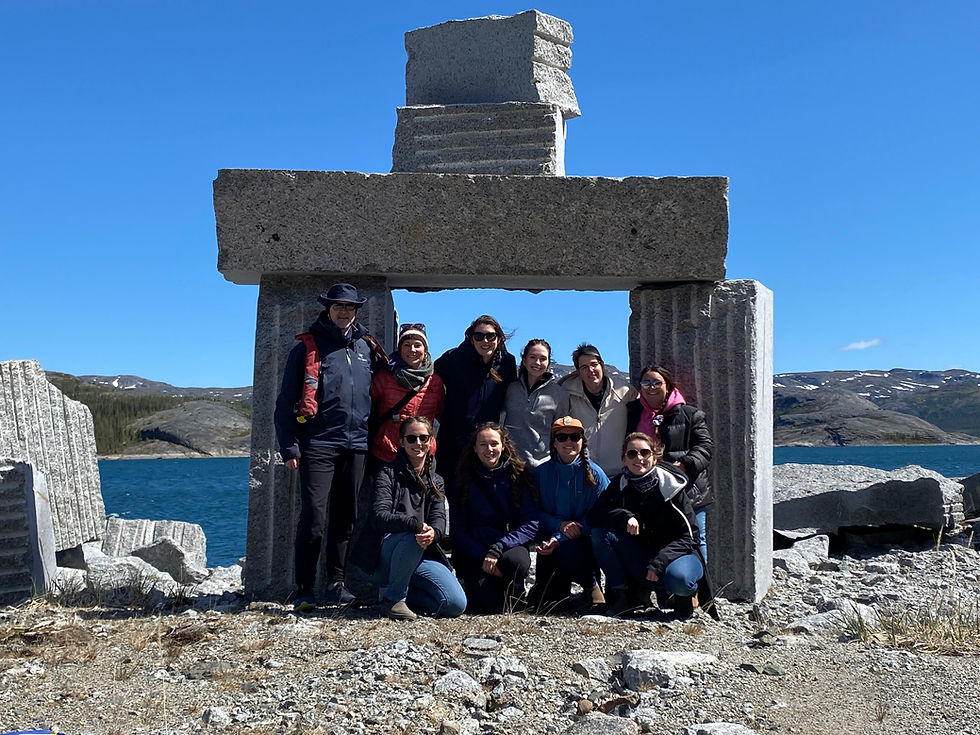
Students in the class of AVC 2013, travelled to Hopedale as participants on the Chinook Project. As part of the experience, the students craft various pieces of writing. No photos were attached to this Anonymous essay, they are provided from other projects to the same area.
Before visiting Hopedale with the Chinook Project, I thought I would educate myself on Canada’s North. I read about the history of Hopedale, and the mostly Inuit community there. In this era of the internet, my expectation was to be able to gain a thorough understanding of the issues facing the Northern communities of Labrador. I discovered that, in fact, it is difficult to follow current events occurring in Northern Canadian regions; one or two brief stories may be all the rest of Canada has access to when it comes to media coverage of Aboriginal communities. What I also failed to realize was that although the history of a place is important in gaining an understanding of it today, there is nothing more educational than visiting a place yourself, and hearing its stories firsthand. The staircase in this photo (unfortunately no photo is attached to the essay) is reminiscent of this important realization. Although one may be able to imagine what you will find at the top, without actually making the climb yourself, you will never know for sure.
The day we arrived in Hopedale, we unloaded our bags and gear from the plane, and we waited. We were meant to have transportation from the town council, but after rides came and went for the other passengers, “Team Hopedale” remained alone at the little Hopedale airport. Eventually, our ride arrived, explaining that there was a funeral in town today. It was for a 24 year old man – a boy really – who died of complications secondary to ethylene glycol consumption: antifreeze. Earlier in the month, the RCMP were called to a Hopedale home where two men, relatives of one another, were intoxicated after several hours of consuming antifreeze. One of the men was unconscious when found. He was flown to a hospital in St. John’s, but sadly could not be resuscitated. Stories involving intoxication through dangerous chemicals, such as antifreeze consumption or sniffing of gasoline, are all too familiar in Northern communities. A quick media search reveals numerous stories, often involving young people. The data is there; substance abuse is a serious problem in Aboriginal communities. What is missing is a solution to the problem.
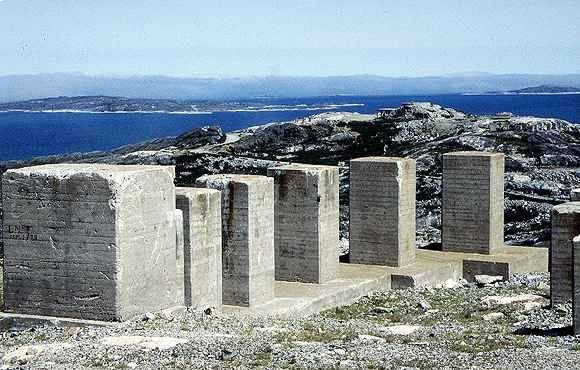
During our time in Hopedale, we were fortunate enough to be taken on a short tour of the area. During the Cold War, the U.S. air force operated a radar station in Hopedale. Dismantled in 1968, this is part of what remains. Concrete foundations nestled atop a hill overlooking the town. Currently it is a place for locals to walk with the family dog, or perhaps for youth to gather, leaving their mark in various shades of spray paint. Or a place for tourists, like us, to learn a bit more about the community they are visiting. The view from the top of the stairway is initially breathtaking, with a spectacular view of Hopedale from above. But there is more to this view than meets the eye. Ahead, beyond another hill, lie the remains of another military base, this one Canadian. Abandoned in much the same way this one was. To the uninformed, a lake in the distance appears to be a swimming hole to be enjoyed by the locals. Only someone who knows the region understands why this body of water is known to locals as “Dump Pond”, where PCBs continue to leach from equipment left behind by the U.S. air force.
The contaminated landscape is not a secret - there have been plenty of discussions about this issue in the last few years. In 2010, more than 40 years after the last tar-filled drum was dumped, an environmental survey was conducted to quantify the extent of the contamination. The government of Newfoundland and Labrador hired an environmental consultancy group to compile a report of the environmental contamination in Hopedale. What resulted was a 270 page document, illegible to anyone but the most devout academic. Their findings: More testing needs to be done. As of June 2012, residents in the area are still advised to refrain from picking berries or hunting game in the region, as it could be contaminated. Hopedale is yet to see any attempts at clean-up or decontamination.
The same day we visited the radar station site, we were given a tour of Hopedale’s school, and our history lesson continued. We learned about a six year old kindergarten student who, in 2006, contracted tuberculosis. She lived with her sister and single father; however, she received much of her parenting from a concerned and very dedicated teacher. The girl suffered from neglect in her home, and quite possibly malnutrition, two known risk factors for tuberculosis infection. She was airlifted to the nearest hospital in Goose Bay; however, sadly, she succumbed to the disease. Health officials in the area began a testing program in an attempt to locate the source of the young girl’s infection, however after the report of the girl’s death, the media trail goes cold. Although many of us in Canada think of tuberculosis as an old, nearly eradicated disease, this is not the reality for those in Canada’s aboriginal communities. The Labrador population accounts for only 5% of the total population of Newfoundland and Labrador but is responsible for approximately 1/3 of the confirmed cases of tuberculosis in the early 21st century in Newfoundland and Labrador. The history of tuberculosis in Aboriginal populations is long, and is far from over. A complicating factor is that tuberculosis is likely maintained in these communities by subclinical carriers – those who are infected but show no clinical signs of infection. When a case of tuberculosis is confirmed, people in close contact with the patient are tested; however thus far, it has not been enough to eradicate the disease in Northern communities.
Hopedale is a beautiful community full of wonderful people. It unfortunately has suffered tragic circumstances, including substance abuse, a contaminated landscape, and poor control of infectious diseases. The lack of media coverage about these issues makes it difficult for those of us in the rest of Canada to become impassioned and outraged, the way we should be. On the other hand, Canadians should be insistent on media coverage, so these issues are no longer silenced. We owe it to our fellow Canadians to demand change, and find solutions to the problems that plague Aboriginal communities in our country.


Comments